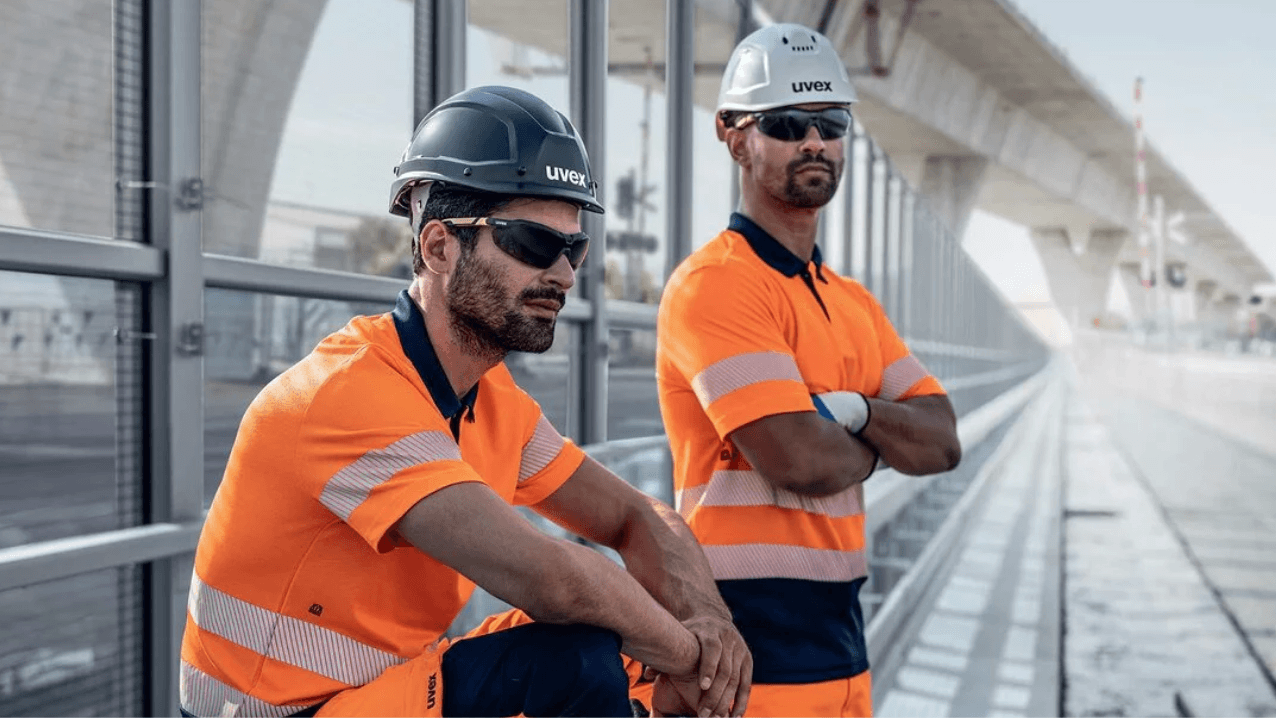
On an Australian worksite, eye injuries happen fast. A grinder throws a shard, a drill spits swarf, a gust of wind lifts dust into a tired eye. And then the day is over, sometimes the week too.
This is what trades should know. Safety glasses are not just a box to tick. They are a piece of PPE that has to match the task, the face, the weather, and the rules on that site. Get the right pair and most people forget they are even wearing them. Get the wrong pair and they will be pushed up, fogged out, or left in the ute.
What risks on Australian sites make eye protection non-negotiable?
Eye risks on Australian sites are constant and varied, not occasional. Flying particles, UV exposure, dust, splashes, and impact hazards show up across construction, mining, fabrication, landscaping, and maintenance.
Grinding and cutting throw high-speed fragments. Drilling creates chips that bounce under frames. Pressure washing can drive debris back into the face. Even sweeping up at knock off can kick fine dust into eyes. A small irritation becomes rubbing, then infection. Basic stuff, common outcomes.
What do Australian standards actually require for eye protection?
Australian requirements centre on AS NZS 1337.1 for occupational eye protectors. In plain terms, compliant eye protection should be impact rated and appropriate to the hazard.
Sites may also align PPE rules with WHS obligations and internal contractor requirements, especially on major projects in Sydney, Melbourne, Brisbane, Perth, and regional mining zones. If eyewear is not marked and rated, it can fail compliance checks. That is when a worker is told to change it or stop.
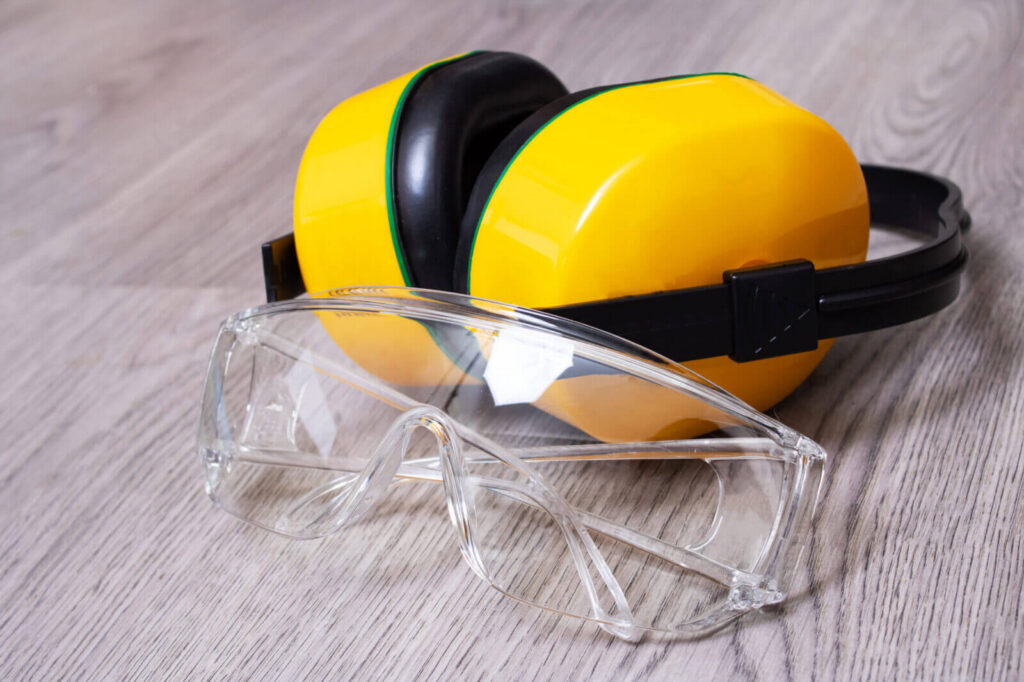
How can trades tell if safety glasses are compliant and suitable?
The fastest check is markings and documentation. Compliant safety glasses are typically marked to show they meet AS NZS 1337.1, and reputable suppliers provide specs that match the rating.
Suitability is the next part. A lens that is impact rated but leaves gaps at the cheek is not ideal for dusty work. A frame that pinches behind the ears will end up removed. The best indicator is whether the wearer can keep them on through the task without constant adjustment.
Which lens types work best for different Australian trade tasks?
Lens choice should match the hazard first, then comfort. Clear is common for indoor and low light tasks. Tinted helps in bright outdoor environments, and in Australia that can mean most of the year.
Polarised lenses can reduce glare when working around reflective surfaces, water, or light coloured concrete. Anti-scratch coatings matter in dusty workshops. For chemical splash work, a sealed option or goggles may be required. The right safety glasses reduce temptation to swap to sunnies.
When should trades use goggles instead of safety glasses?
Goggles are the better choice when there is splash risk, fine dust, or heavy particulate exposure. They seal to the face more effectively than open frame eyewear.
Think mixing chemicals, cutting fibre cement, working in roof spaces full of insulation, or tasks with high dust load like concrete grinding. In mining and some industrial maintenance, a site may mandate goggles for specific zones. Safety glasses still have a place, but sometimes they are simply not enough.
How should safety glasses fit to actually protect, not just sit there?
Fit should be snug, stable, and coverage focused. In the first moments, the glasses should sit close without touching eyelashes, with minimal gaps at the sides and brow.
Arms should not squeeze the head or slide with sweat. Nose bridges should not leave red marks after an hour. If a worker has to keep pushing safety glasses back up, they will eventually take them off, usually right before something goes wrong.
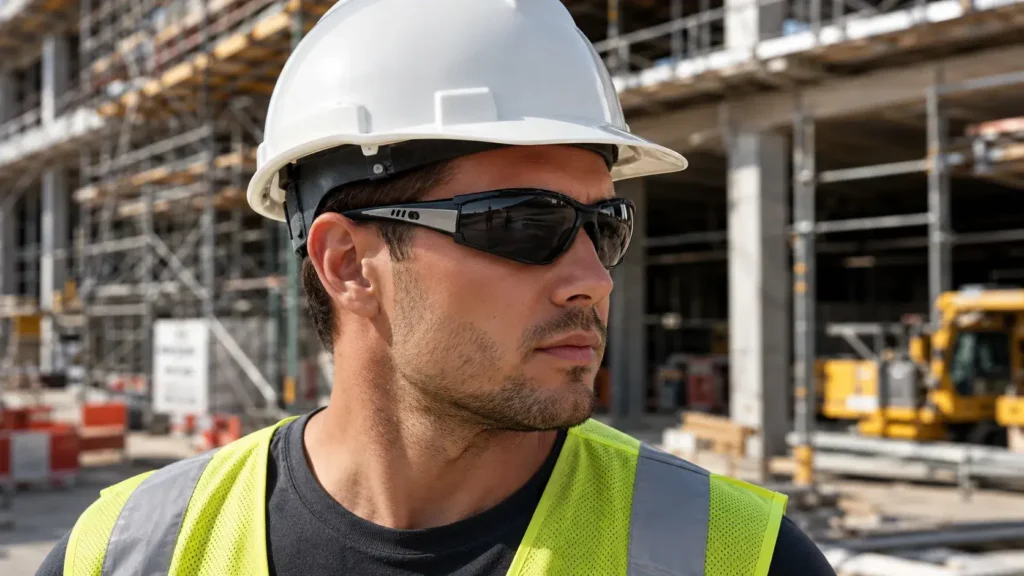
What about fogging in humid Australian conditions?
Fogging is a comfort issue that quickly becomes a safety issue. If lenses fog, wearers lift eyewear or remove it, which defeats the whole point.
Anti-fog coatings and better ventilation can help. So can choosing designs that balance wraparound coverage with airflow. In Queensland humidity or rainy winter mornings in NSW and Victoria, fogging is common. Selecting safety glasses built for fog management is often the simplest fix.
Do prescription wearers need special safety glasses?
Yes, and they should not rely on regular prescription frames on site. Prescription safety eyewear is designed to meet impact requirements and provide proper coverage.
There are also fit-over options that sit over prescription glasses, but they can be bulky and more prone to fogging. The best approach is often dedicated prescription safety glasses fitted correctly, especially for full-time site work. It saves hassle and reduces risk.
How do tinted lenses and UV ratings matter in Australia?
UV exposure is a real factor in Australia, not a minor add-on. Outdoor tradies can be in harsh light for hours, and squinting reduces awareness and comfort.
Tinted lenses can improve visibility in glare, and UV protection helps long-term eye health. The key is ensuring tinted options still meet impact ratings. Many sites allow tinted safety glasses, but some indoor roles prefer clear for low light accuracy. One pair rarely covers every scenario.
How should trades maintain and replace safety glasses?
Maintenance is basic but important. Clean lenses with suitable wipes or mild soap and water, not a gritty shirt tail. Store them in a case, not loose in a toolbox full of screws.
Replace eyewear when lenses are deeply scratched, coatings peel, frames crack, or fit becomes loose. Scratches are not just annoying; they create glare and distortions. Keeping safety glasses in good condition also supports compliance during site inspections and toolbox talks.
What should trades look for when buying safety glasses in Australia?
They should start with compliance, then comfort, then task match. Buying from established Australian suppliers makes it easier to confirm AS NZS 1337.1 rating and access product support.
Key considerations include wraparound coverage, lens coating options, anti-fog performance, and compatibility with other PPE like earmuffs and respirators. Cheap eyewear that hurts will not be worn. Well-chosen safety glasses become routine, which is the whole goal.
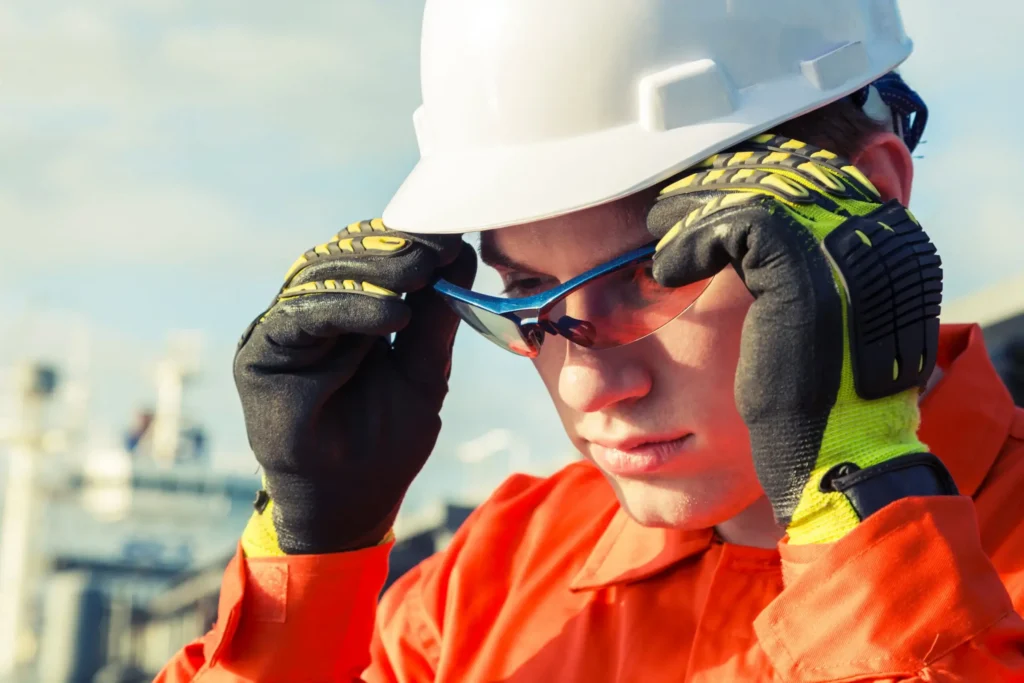
How can employers and supervisors improve eye protection compliance on site?
Make it easy, practical, and consistent. Stock multiple sizes and styles, not a single generic pair that fits nobody. Include tinted and clear options so people are not improvising.
Supervisors should also model good behaviour. If leading hands wear their eye protection properly, others follow. Regular checks help, but so does listening when workers say a frame fogs or slips. When safety glasses are comfortable, compliance stops being a struggle and becomes normal.
FAQs (Frequently Asked Questions)
Why is eye protection essential on Australian worksites?
Eye protection is non-negotiable on Australian worksites due to constant and varied risks such as flying particles, UV exposure, dust, splashes, and impact hazards found across industries like construction, mining, fabrication, landscaping, and maintenance. Tasks like grinding, cutting, drilling, pressure washing, and even sweeping can expose workers to hazards that can cause serious eye injuries.
What are the Australian standards for safety glasses on work sites?
Australian standards require safety glasses to comply with AS NZS 1337.1 for occupational eye protectors. This means they must be impact rated and suitable for the specific hazard present. Sites may also enforce additional PPE rules aligned with Work Health and Safety (WHS) obligations and contractor requirements to ensure compliance.
How can tradespeople ensure their safety glasses are compliant and fit for purpose?
Tradespeople should check for markings on the eyewear confirming compliance with AS NZS 1337.1 and obtain specifications from reputable suppliers matching the rating. Suitability includes ensuring a snug fit without gaps that allow dust or debris in, comfortable frames that do not pinch or slide, and eyewear that can be worn throughout tasks without constant adjustment.
When should goggles be used instead of safety glasses?
Goggles are recommended over safety glasses when there is a risk of chemical splashes, fine dust, or heavy particulate exposure. They provide a better seal against the face than open-frame eyewear and are essential during tasks like mixing chemicals, cutting fibre cement, working in dusty roof spaces or insulation areas, concrete grinding, and in certain mining or industrial zones where goggles may be mandated.
How can fogging issues in humid Australian conditions be managed with safety glasses?
Fogging compromises comfort and safety by causing wearers to remove or adjust their eyewear. To manage this, choose safety glasses with anti-fog coatings and designs that balance wraparound coverage with ventilation. Selecting eyewear specifically built for fog management is especially important in humid regions like Queensland or during rainy seasons in NSW and Victoria.
What considerations should prescription wearers have regarding safety glasses on site?
Prescription wearers should use dedicated prescription safety glasses designed to meet impact requirements and provide proper coverage rather than relying on regular prescription frames. Fit-over options exist but tend to be bulky and prone to fogging. Properly fitted prescription safety eyewear reduces hassle and risk for full-time site workers.
Other resources
Safety Mesh: Delivery, Lead Times and Site Access